Polyaspartic and epoxy are not the same product
The shorthand epoxy floor hides a real difference. Pure epoxy as a topcoat turns yellow in sunlight. It gets gummy in late July heat. And it asks for one to three days of cure before anything heavier than a soft shoe touches it. Polyaspartic was built to skip all three problems. It is also the chemistry that turns the one-day install schedule into a real promise instead of a marketing line.
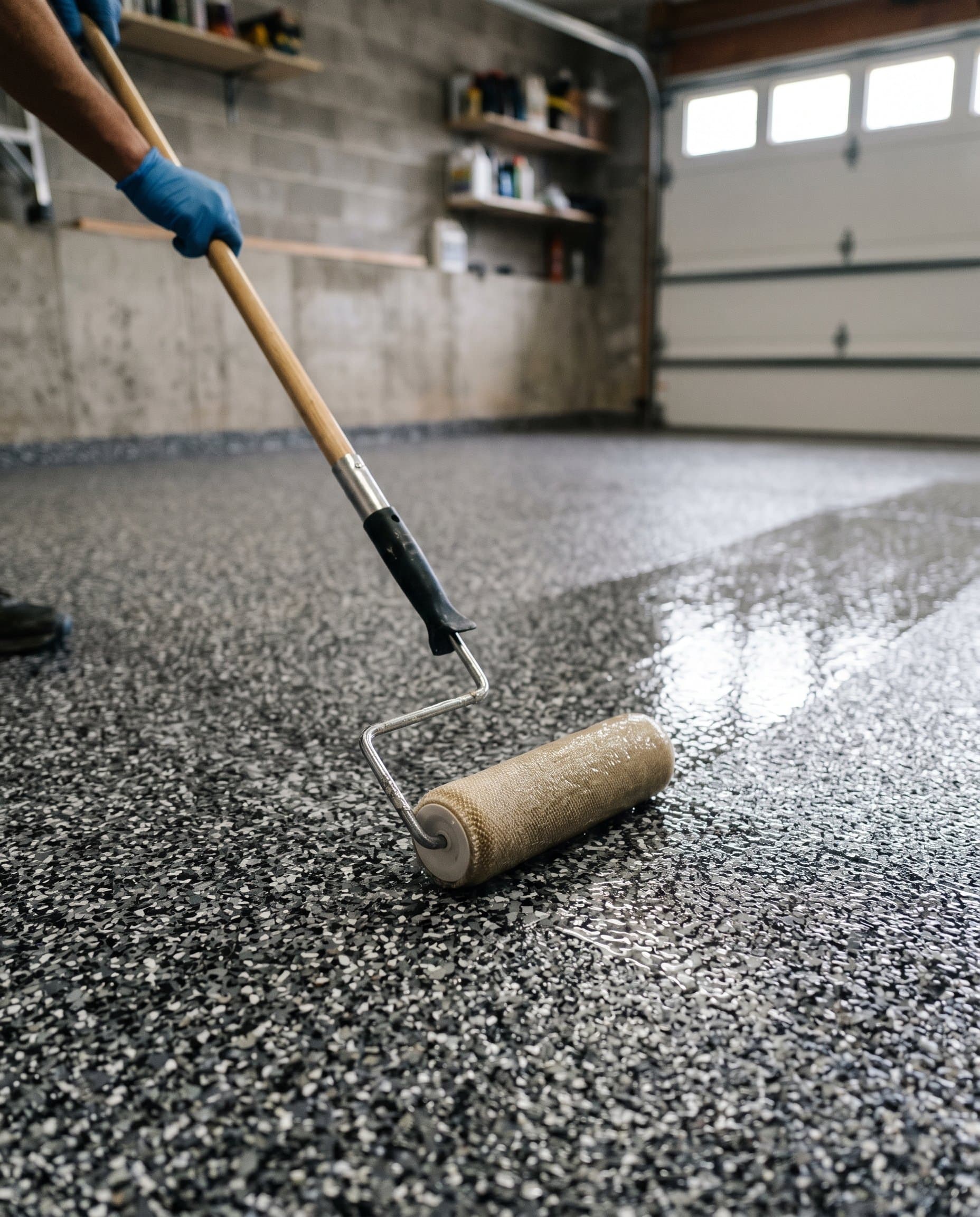
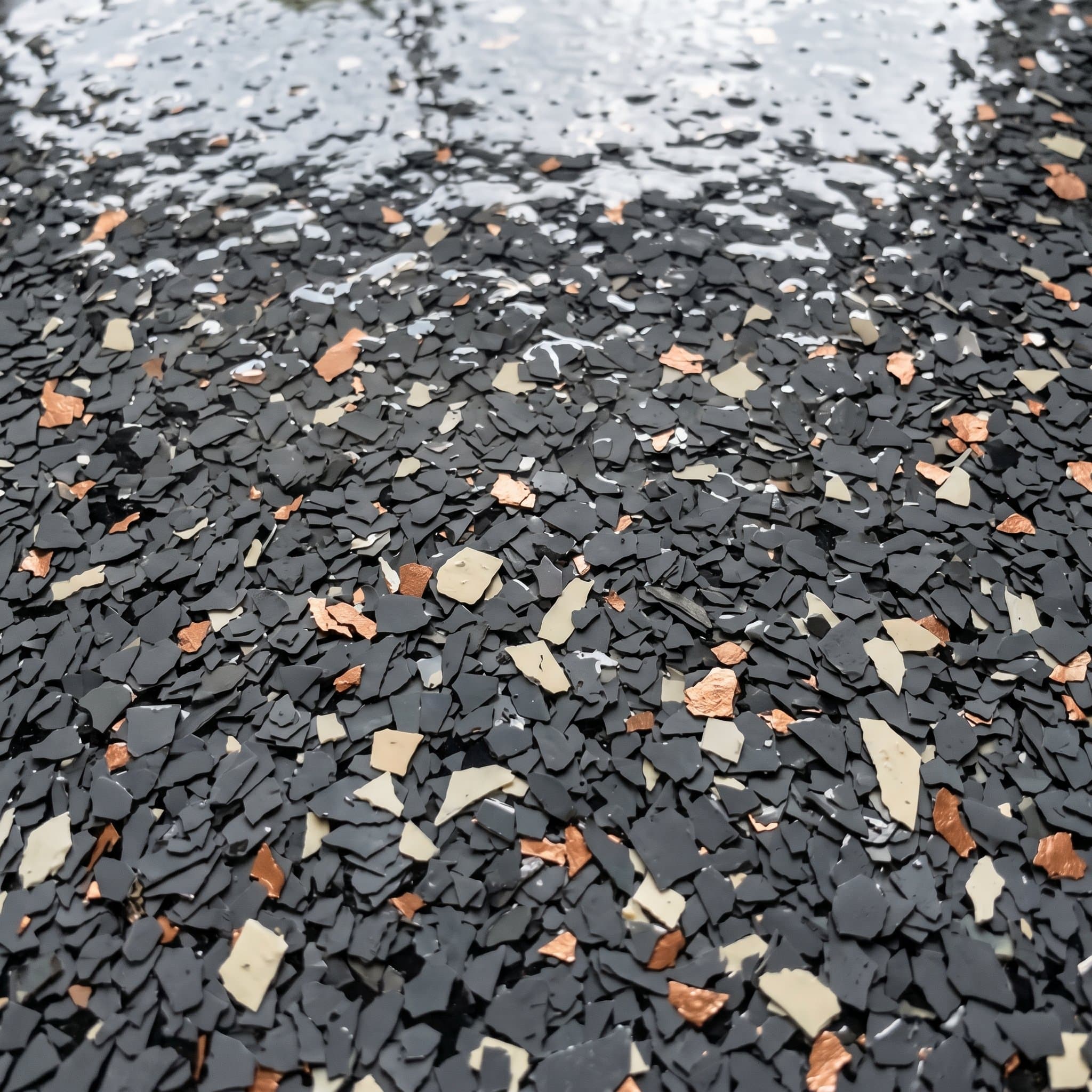
On a finished floor the polyaspartic is the last pass. It does work the epoxy below it cannot. Polyaspartic is a type of urethane. It cures by reacting with humidity in the air, not by waiting for solvent to flash off. The film walks on inside hours. Cars roll on the next day. It stays clear under window light. It tests harder than the sealers used on warehouse aisles. It sits on top of the epoxy base, not in place of it. The two layers together combine the grip of epoxy with the toughness of urethane.
- Cures to foot traffic in about two hours. Cars roll on the slab in a day.
- Stays clear under a skylight, a window well, or a garage door open all afternoon.
- Tests harder than a standard industrial floor sealer, so hot tires do not pick at it.
- Bonds chemically with the epoxy underneath. No weak plane between the layers.
- Comes in matte, satin, and high gloss, plus a slip-rated version with a grit additive.
When calling around for quotes, the most useful single question is this. Is the topcoat polyaspartic, or just another coat of epoxy? A reputable installer is happy to point at the data sheet for the product going down. The honest gap between a coating that lasts five years and one that runs 15 to 20 often comes down to this one line item.
Polyaspartic is not booked on its own. It is the final layer in every quality coating quote. If a competing bid runs much cheaper than the others on the table, this is almost always the line missing from the scope.