
Epoxy Repair and Recoat · Ann Arbor

Epoxy Repair and Recoat in Ann Arbor, MI

Open a small test grind to read the failure. Take the bad coating off. Lay down the system that should have been spec'd the first time. Most jobs wrap in a day.

1 day installs · typical timeline
Free Quote

Free Epoxy Repair and Recoat quote.

We reply within 1 business hour. No spam, ever.

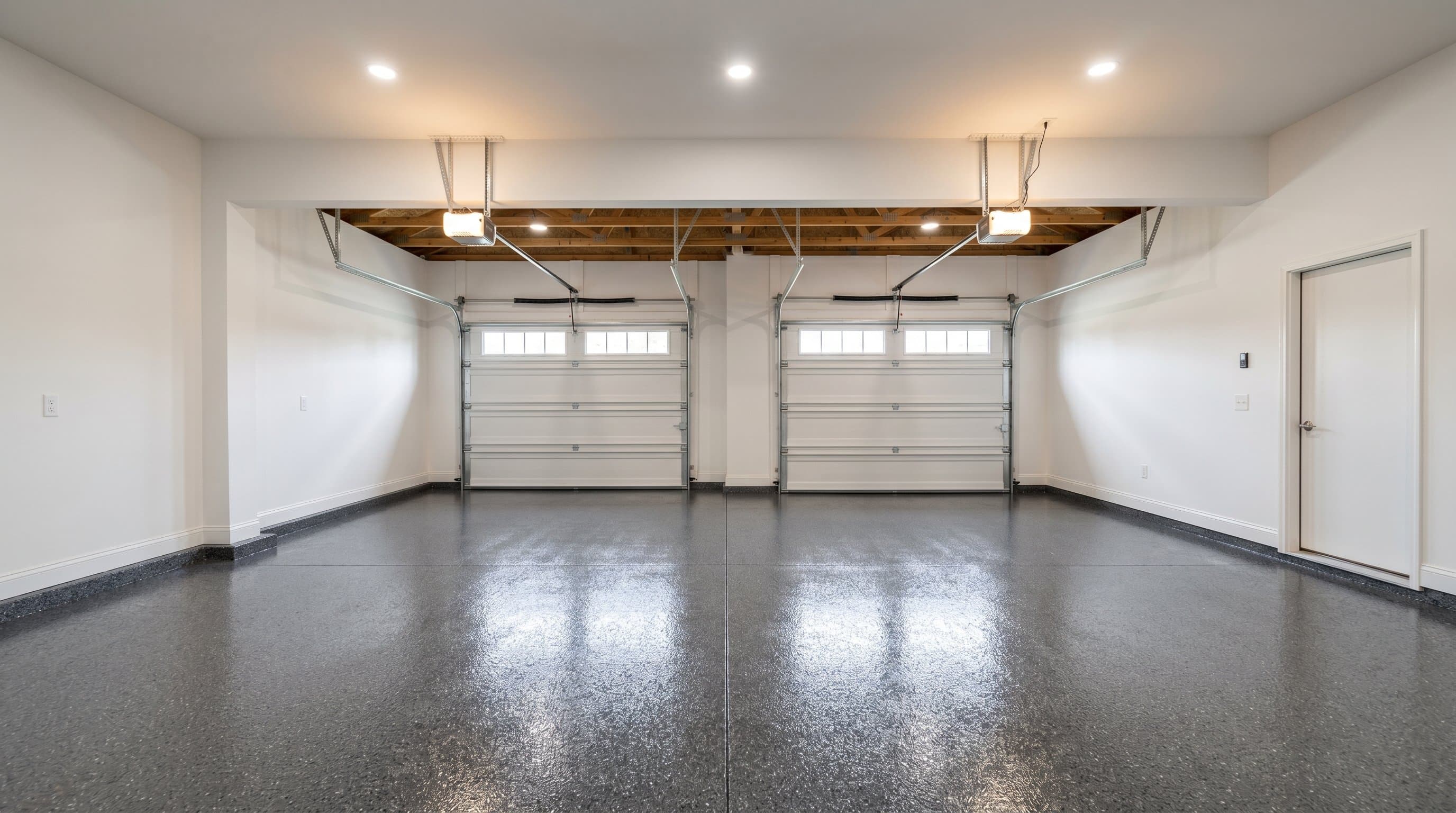
Ann Arbor garage after recoat with a charcoal flake floor.
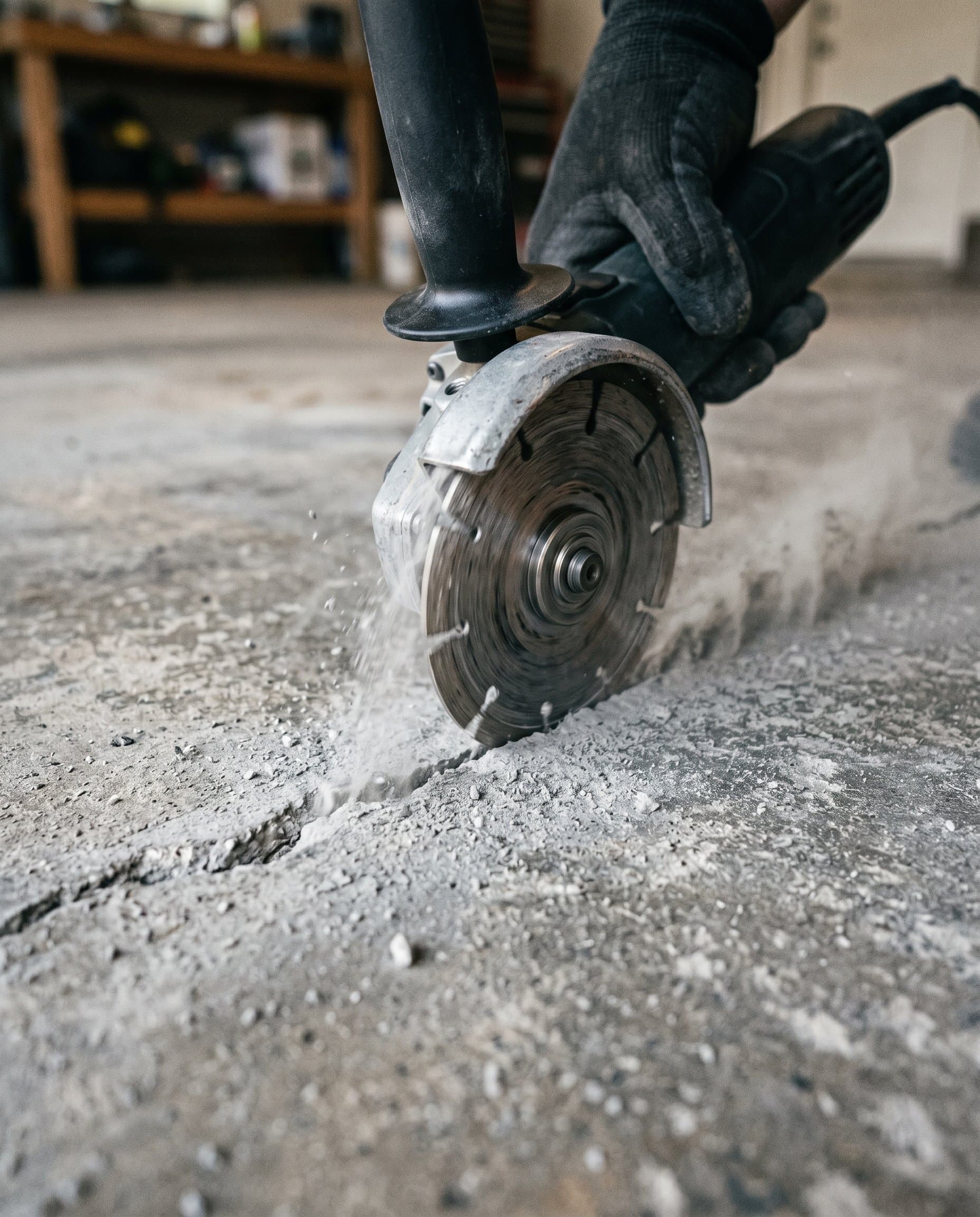
Crack saw opening a hairline crack across a concrete slab.
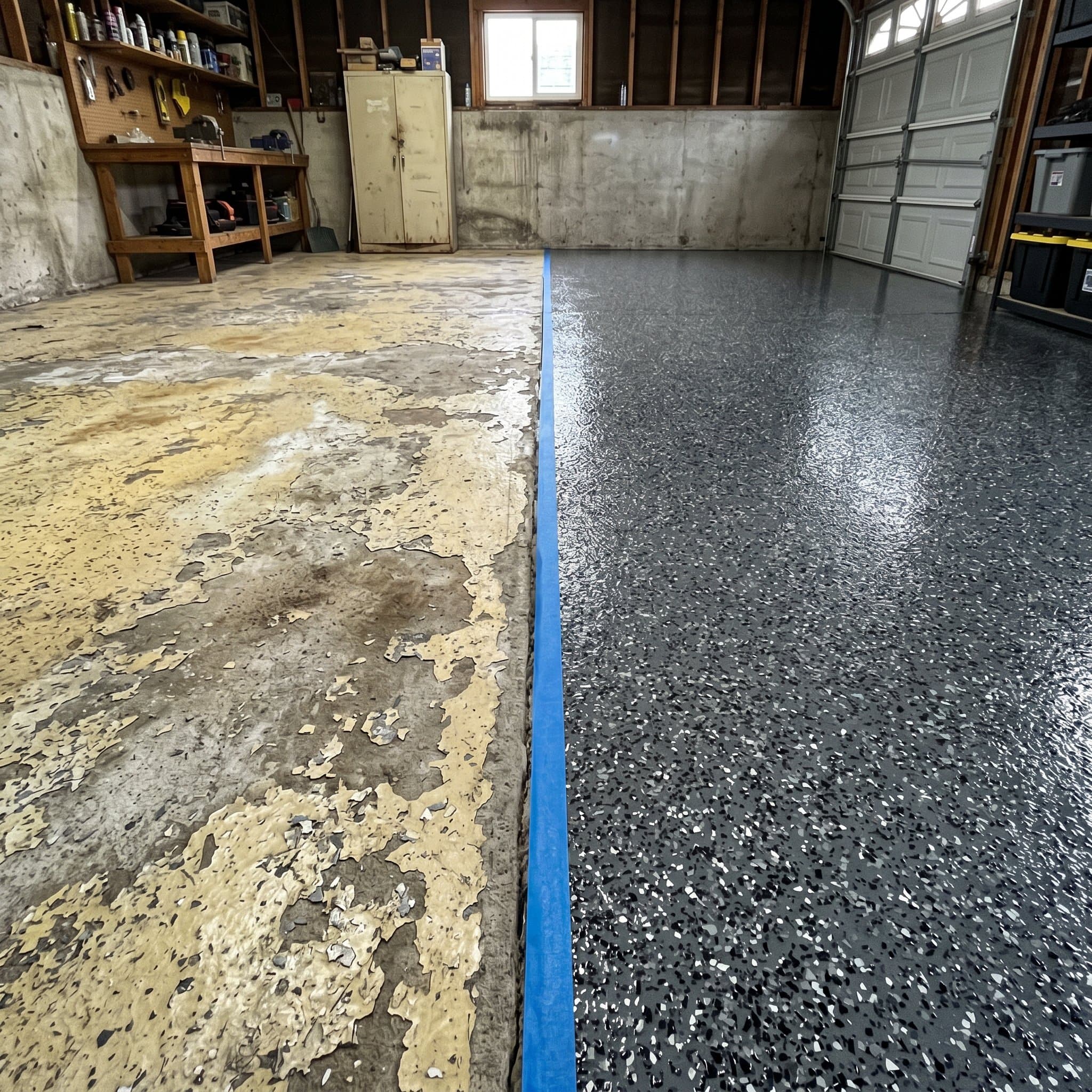
Garage slab: failed coating one side, flake the other.
What we install

Why a coating fails, and what the slab is telling you

An Ann Arbor garage with peeled, chipping, hazed, or gummy epoxy is almost always a coating story. Not a concrete story. The slab is fine. The product on top of it was the wrong call. Failures cluster around three causes. Cheap kits from the home center, with one soft water based layer, peel inside two or three winters. Epoxy floors without a polyaspartic on top yellow and turn gummy through the first July. Coatings put straight onto an unprimed slab lift in whole sections once the vapor pressure underneath builds. Each of the three is fully fixable. But only after the failed product comes off in full.

A real repair starts at the walk-through, with a small test grind (about a foot square) through the failed coating to read the failure firsthand. The diagnosis drives the quote. Not a guess from a phone photo. Most jobs then run a full grind back to fresh concrete. Cracks get a polyurea fill. Spalled zones where the old coating took aggregate with it get a mortar patch. The reinstall is the standard system: primer matched to the current vapor reading, solids epoxy base, full flake broadcast, polyaspartic topcoat. The finished floor acts like a fresh install on a new slab. The prep was rebuilt from the slab up.

  • Test grind during the walk-through. The quote follows the reading, not a guess.
  • Failed coating gets fully removed back to fresh concrete. Not feathered into a thin refresh.
  • Mortar patching for slab zones where the failed coating took concrete up with it.
  • Reinstall uses the same materials and the same process as a fresh concrete install.
  • A one or two car garage usually wraps the repair install inside one working day.
The concrete is rarely the patient. The coating was the wrong prescription. Pulling it off and rewriting it is the cure.

Repair calls in this region tend to come from one of two places. Homeowners who installed a DIY kit two summers ago and are now standing on lifted flake. Owners who hired a cheap installer and watched the floor lift after the first humid August. Both situations recover. Whether to recoat or tear out the slab depends on what the test grind shows. That is why doing the grind during the walk-through, before the quote, is the part that does not get skipped.

If a failing epoxy floor is the situation in an Ann Arbor garage or basement, the form on this page reaches a local installer who handles a free walk-through with the test grind. Most homeowners are surprised at how much more affordable the fix is than ripping out the entire slab.

Materials

What the test grind shows on the spot

A failed epoxy floor fails for a short list of reasons. The test grind tells the installer which one within the first twenty minutes of the walk-through. The installer marks a section about a foot square, runs a small grinder across it, and reads how the existing coating responds. A coating that lifts off the slab in clean sheets bonded poorly from the start. Almost always because the prep was an acid etch or a pressure rinse, not a mechanical grind. A coating that pulls chunks of aggregate up with it bonded too aggressively to a slab that was already weak below the surface (water damage, freeze-thaw spalling, prior chemical exposure). A coating that grinds away in a thin even layer with the concrete sound below it is the easy diagnosis. The slab is fine. The product was just wrong for the conditions.

Once the failure is named, the repair plan follows on its own. Most jobs run a full grind and reinstall. Some need extra mortar patching wherever the failed coating took aggregate with it during removal. The reinstall is the standard system. A vapor mitigating primer sized to the slab's current moisture reading (not the reading from when the original coating went down years ago). A solids epoxy base coat. A full chip broadcast. A polyaspartic topcoat. The new floor does not inherit whatever was wrong with the original. It acts like a fresh install on a new slab.

  • A test grind happens during the walk-through, before any quote.
  • Three failure modes the grind tells apart: bad prep, weak slab, wrong product on a sound slab.
  • Full removal beats a thin refresh in every case where the original product actually failed.
  • Slab patching enters the scope only where aggregate came up with the failed coating.
Ann Arbor garage after recoat with charcoal flake polyaspartic.
What about the alternatives?

Repair approaches measured by what they actually fix

Bids on a failing floor usually fall into one of the five buckets below. Only one of them fixes the actual cause. The other four buy time, kick the cost down the road, or in two cases guarantee a repeat failure on schedule.

Paint over the failed coating

Cheapest cosmetic pass. Bonds to the failed coating, not the slab. Comes apart in six to eighteen months. Both layers lift together.

Skip

Thin refresh sealer over the existing floor

Adds a clear or pigmented topcoat over the failed layer. Buys two or three cosmetic years at most. Does nothing for the bond or the moisture cause.

Skip

Local patching of one zone only

Works when the failure is small (under ten percent of the floor) and the rest reads sound on the test grind. Rare to be that contained.

Acceptable

Full grind and reinstall

The actual fix. Removes the failed product. Reads the cause. Reinstalls a system sized to the current slab. The new floor acts like a fresh install.

Recommended

Tear out and replace the slab

Last resort. Reserved for slabs that are structurally bad (large settling cracks, deep water damage). Rare on home garages.

Acceptable
How it goes

From quote to walk-on, fast.

01

Free walk-through

02

Prep the slab

03

Coat and broadcast

04

Polyaspartic topcoat

Before you book

Questions worth pushing on before signing a repair quote

Repair work attracts more shortcut bids than fresh installs. The homeowner already paid for one floor and is sensitive to a second big number. The questions below separate a repair that will hold from a repair that will fail the same way.

Does the quote include the test grind?
It should, at no charge. A reputable repair installer runs the small grind during the walk-through (about twenty minutes) and writes the observed failure into the quote. A quote without the grind is built on what the homeowner said over the phone. Not on what the slab actually shows. That is the path by which repair jobs end up failing for the same reason the original did.
How does the install handle slab zones where aggregate came up with the old coating?
A polymer mortar concrete repair compound, allowed to cure, ground level with the slab around it before the new system lands. Patched areas usually read invisible under the finished flake broadcast above. An installer who plans to coat straight over a spalled zone without patching is skipping a step. That skip will show through the new floor inside the first season.
On a partial repair, will the recoat blend exactly to the existing floor?
Custom chip blends can match closely if the original installer wrote down the recipe. Exact matches across years are rare. A small patch in a corner with low traffic usually reads invisible once cured. A big patch (over twenty percent of the floor) often shows as a subtle shade shift under certain lighting. Most owners choosing a partial repair accept that. A full grind and reinstall removes the matching problem entirely.
How does the installer think about workmanship on the recoat?
A reputable installer stands behind the new system for the same period as a fresh install, as long as the moisture reading and the prep were correct at install. Coverage usually excludes the original failure repeating if the underlying cause (steady basement moisture, repeat chemical exposure) was not actually fixed. Ask the installer to put in writing what is and is not covered before signing.
What if the cause of the original failure cannot actually be fixed?
An honest installer says so before quoting. Coating over a slab with steady moisture pushing through (a failed sump, a foundation crack with seepage) is a guaranteed repeat failure inside a few years. The actual fix in those cases is drainage, sump replacement, or a vapor barrier. Not another coating. A walk-through that names a problem outside the coating scope and points at fixing it first, sometimes through a different trade, is the sign of a reputable installer. One that just quotes another coating job is selling work that will not last.
Aftercare

Keeping the recoat from failing the same way the first one did

A recoated floor carries the same routine care as a fresh install, with one extra item. The original failure usually points at a habit or condition that helped cause it. If the first floor lifted because of basement vapor, the new floor still needs the dehumidifier and sump pump running. If the first floor failed under chemical exposure (battery acid spills, full strength degreaser, hot solvent), the spill habit needs to change. The recoat itself is built to hold. Whether it actually holds depends on whether the conditions that defeated the first floor have been addressed.

  • Keep the basement dehumidifier running through spring and early summer. Slab vapor peaks in this region then.
  • Keep entry mats at every doorway. Salt grit helped cause most garage floor failures even when it was not the main story.
  • Catch oil, brake fluid, and antifreeze spills the same day. Overnight contact is when chemistry starts attacking the topcoat.
  • Do a quick scan at every season change for new efflorescence, hairline cracks, or coating dulling. Catches a repeat failure early.
  • Anything that looks off, call the installer right away. Observations in the first year are usually covered. Observations at year five are not.
Ann Arbor garage after recoat with a charcoal flake floor.
FAQ

Frequent questions about repair and recoat

How long does a quality epoxy garage floor hold up in the Ann Arbor climate?
A properly built stack of three coats (primer, base, polyaspartic topcoat) on an Ann Arbor garage slab routinely runs past a decade before any wear layer refresh is needed. The topcoat tests harder than industrial floor sealer, which is the reason brine, hot tire contact, and the swing season freeze cycling do not break it down. The water-based kits with one soft layer from the home center usually fail inside two or three winters because they skip the moisture primer entirely and the topcoat is soft.
What separates epoxy from polyaspartic, in practice?
The two products do different jobs inside the same system. Epoxy is the structural layer (primer plus base coat) that bonds chemically to the slab and provides the film thickness. Polyaspartic is the topcoat above that, which gives the floor its hardness, its clarity under daylight, and the fast cure window that makes a one-day install realistic. A floor with only epoxy on it lacks the topcoat: softer film, ambers in sunlight, slower cure. A quality install runs both layers because each contributes something the other cannot.
How are coating jobs typically priced in this market?
Three variables drive the number: floor square footage, the condition of the slab below, and the finish choice. Slabs carrying deep cracks, oil saturation, or heavy moisture readings add to the prep portion. Metallic pours and dense custom flake blends sit at the upper end. A reputable installer in the Ann Arbor area writes a fixed number on paper after a free walk-through rather than a range over the phone. The per square foot numbers a homeowner sees published online tend to mislead because they ignore the slab.
Are winter installs realistic in southeast Michigan?
Yes. The work happens indoors, so as long as the garage holds 55 degrees Fahrenheit through cure, the season is not the limiting factor. Most winter installs run a portable heater for a few hours through the topcoat pass. Spring and fall are the busiest scheduling windows in this region, so winter often has shorter lead times for homeowners who want a coating in place before the next salt season starts.
Will the floor pick up or stain under hot tires?
Hot-tire pickup is the failure mode that takes out cheap coatings. A cured polyaspartic topcoat is harder than the tire compound, so it stays bonded to the base layer even after a long highway drive in July heat. Reputable installers in the area typically include a workmanship guarantee in the first year against tire transfer or lift. The exact callback policy is worth confirming with each installer before signing.
Ready when you are

Ready for a real Ann Arbor floor?

Send a few photos or book a free 15-minute on-site walk-through. A fixed written quote within one business day.

Get a free quoteCall (734) 821-3099
CallFree Quote